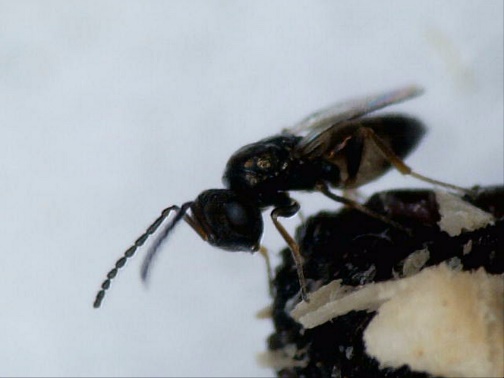
Parasitic wasp photo courtesy of APPI
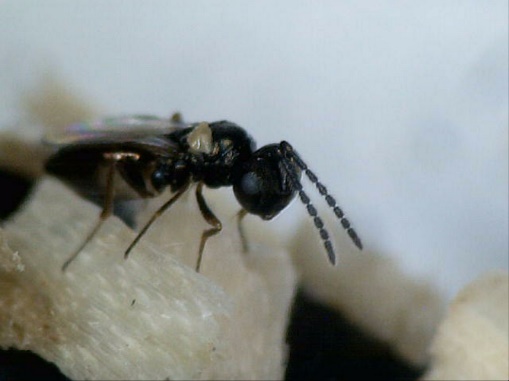
Parasitic wasp photo courtesy of APPI
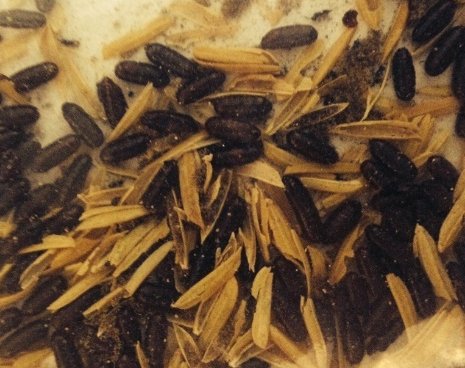
Parasitic wasp photo courtesy of APPI
Parasitic wasps are not harmful to humans or animals; they do not sting and do not fly around in the environment. Their sole focus is to breed and complete
their own life-cycle; to do this they need flies, as they lay their eggs within the fly pupa, thus destroying the fly’s lifecycle, taking the title predator
wasp. The wasp species we supply belongings to the same order as ants and wasps, Hymenoptera. The parasitic wasps are a few mm in length and can
be seen
with the naked eye.
The female makes a hole in the fly pupa and lay her fertile eggs inside; out of which the newly hatched wasps will emerge. You can see evidence of their
numerous exit holes in the fly pupa. This part is the key to the success of breaking the fly lifecycle, as the fly pupa will have been eaten by the wasp
offspring. The wasp lives at manure level and will go into a diapause if the weather is cold. As a guide the wasps live comfortably above 15°C, however
it is likely in the UK that most deep pits will not drop to very low temperatures unless the winter is severe.
Application Rate
Application details will of course be discussed with you should you want to use the parasitic wasps. Details are taken of your flock ages and flock sizes
before an order is placed. This way we can calculate your specific requirements over the season and advise you of the cost in advance.
Parasitic wasps are applied every 3 to 4 weeks through the warmer months of March to October, targeting the pit of the poultry house. The application
sites are chosen by the site manager as they check out the drier spots where the flies pupate; the wasps need the pupa for their own survival and seek
them out by flying and crawling around the dung surface. Generally they are applied through the slats, avoiding putting them under the drinkers as these
are not the places flies pupate.
As a guide, for every 3000 layers you will need 1 pack of wasps per application; if you have 12000 layers you will need 4 packs per application. These
are applied by you once a month and are sent fresh on a monthly basis from us, for the agreed period you intend to use them. If you have a known high
risk of a fly population developing it would be wise to initially apply the wasps every two weeks to get the colony working more quickly. This would be
discussed on a case by case basis.
| Max Flock Size |
3000 |
6000 |
9000 |
12000 |
| Min Wasp 3000 Tubes Required per Application |
1 |
2 |
3 |
4 |
| Min Wasp 3000 Tubes Required for 6 Applications |
6 |
12 |
18 |
24 |
On arrival you apply the parasitic wasps into the pit. The environment the pit provides triggers the new wasps to hatch and they will distribute themselves
as they seek to mate and lay their own eggs. You don’t need to do anything else until the following month. Full instructions will be given.
We do advise as a matter of course monitoring and recording adult fly numbers and maggot activity in the pit. This will assist you greatly in understanding
the fly population if any on your site.
Free Range Systems
Treating free range and litter houses
Appiwasp Product Sheet (pdf)